
Liberty Tea
Brewing a cup of history with antioxidants and caffeine.

While it was once the beverage of choice throughout the 13 colonies, America’s only caffeinated plant nearly vanished into history. Yaupon holly is a perennial shrub in the ilex genus that’s been brewed for over a thousand years. The earliest evidence of yaupon’s consumption dates back to 1050 AD at the Cahokia Mounds in Illinois, which was the center for the ancient Mississippian tribe. The discovery indicates how far yaupon was traded rather than its origins since it’s native to the Southeast.

Native tribes cultivated the yaupon leaves for daily use and exchanged them with other tribes. Archaeologists unearthed ancient vessels containing yaupon in southern Mexico, where it was exchanged for cacao with the Mayans. Similar to cacao, yaupon contains the stimulant theobromine as well as the antioxidants theacrine, theanine, theophylline, quercetin, and chlorogenic acids. The primary ingredient loved back then and to this day is caffeine. Long before colonists drank coffee or tea, which all come from the Camelia sinensis plant, they drank yaupon.
In 1615, a Spanish priest in Florida wrote that “there is no Spaniard nor Indian who does not drink it every day in the morning or evening.” Yaupon was consumed daily because it helped maintain energy levels and improve digestive issues, weight management, diabetes, neurodegenerative diseases, and cardiovascular health. The botanist Francisco Ximenez wrote the following about yaupon over 400 years ago in his chronicles of New World medicinal plants, “any day that a Spaniard does not drink it, he feels he is going to die.”

After the Tea Act and ensuing Boston Tea Party, colonists boycotted the East India Tea Company’s imported teas. The patriotic colonists turned to yaupon holly and dubbed it “Liberty Tea” along with other native herbs. After the war, colonial farms started to focus on commercially growing yaupon, which was sold in London as South Seas Tea and offered in Parisian salons as Apalachine.
Yaupon became so popular that German botanist Johann David Schöpf wrote about it in the 1780s while traveling. Johann said Yaupon was so commonly used by the 1780s that the British East India Company deemed it a threat to their control over the tea market. As a result, England started to limit imports of yaupon into Europe. The British capitalized on a change in yaupon’s taxonomic classification to put an end to it once and for all.
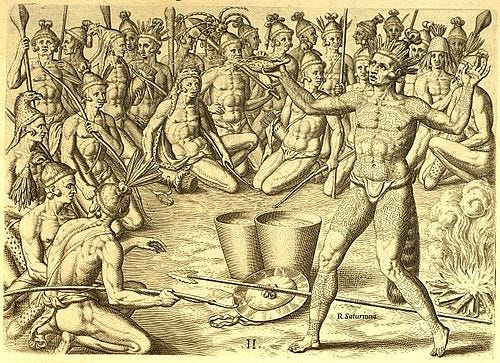
In 1753, Carl Linnaeus assigned yaupon holly the Latin name of Ilex cassine. Cassina had been used by the Timucua people in Florida and Georgia for yaupon. The Ilex holly genus has 570 species of flowering plants in the family Aquifoliaceae. Similar to its South American relative, yerba mate, Ilex paraguariensis, the Seminoles drank yaupon out of hollowed-out shells of a sea snail called lightning whelks. Carl Linnaeus was under the impression that yaupon holly and dahoon holly, a closely related sister variety, were the same plant. William Aiton, a royal gardener at Kew Gardens and a loyal friend of King George, sought to correct the taxonomical error and suppress yaupon’s popularity.
Aiton changed Yaupon’s Latin name to Ilex vomitoria. While the change may indicate his scheming intentions, there is some truth to it, although it was clouded in misjudgment. European colonists in Florida observed members of the Seminole tribe drink yaupon and vomit. Similar to ancient Spartan ceremonies, members of the Seminole tribe would fast and drink copious amounts of yaupon tea until they could no longer hold it down. Unbeknownst to the colonists, the enigmatic ritual was done to find a leader, not a sign of yaupon being emetic. Try drinking over 25 cups of tea or coffee on an empty stomach and see what happens for yourself!
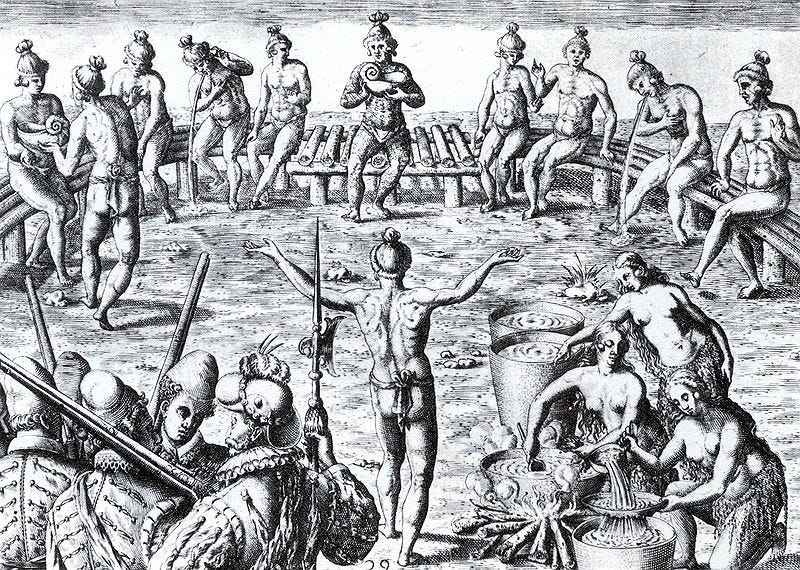
The last person standing during the ceremony was Billy Powell, who earned the title Asi-yahola (Osceola), meaning black drink singer, for proving himself worthy of a leadership role for his fortitude. Osceola is known for his influential leadership in defending the Lower Creek Seminole from colonial attacks and encroachment. Yaupon slowly started to drift into history following the taxonomical change and rise in coffee and east Asian tea leaves.
Make A Liberty Tea at Home
In honor of America’s 250th anniversary, try making a cup of Liberty Tea at home with yaupon or other wild herbs and plants you harvest. You can find yaupon growing in the wild throughout the American Southeast.
I work with a farmer from Florida to source light and dark roast yaupon that’s regeneratively grown without any pesticides or inputs. The light roast yaupon has an herbal, tart, and bright taste while the dark roast has a robust, rich, and smoky taste. Yaupon is low in tannins, so it can be brewed throughout the day without much bitterness.
I just created a new organic Liberty Tea Blend with light roast yaupon, American elderberry, hibiscus flower, and hawthorn berry, all of which are all native to the mainland United States and Hawaii. I also created a new organic American Chai Tea blend with light roast yaupon, clove bud, ginger root, ceylon cinnamon, and coriander seed, all of which I source from American and Hawaiian farmers,